
How Babysitting is Filling Childcare Gaps in the UK
Find a babysitter or babysitting job, or stay up to date with the latest childcare tips!
Get started today for free.
Get startedMore than half of British families need a babysitter at least once per week, with the grand majority of childcare requests taking place during work hours. This highlights how many UK parents rely on babysitting not just for the occasional night out, but as part of how they manage their childcare needs, often during work days. While nurseries remain a key part of the childcare system, their availability, opening hours and costs don’t always align with the realities of modern family life. This article explores how working patterns, childcare gaps, and evolving family needs are shaping the role of babysitting in the UK today.
Childcare Challenges in the UK
Government support doesn’t match real family life
While the UK government offers childcare support through funded hours and tax-free childcare, these schemes often do not fully match how families live and work today. Funded hours are typically limited to standard daytime periods and rarely cover a full working day, excluding early mornings, evenings, and school holidays. This means many parents still need to arrange additional childcare to fill the gaps around their working schedules.
Too many children, not enough nursery places
Even when support exists, finding available childcare can still be challenging. In many areas, there are not enough nursery places, and not all providers offer funded spots. Even when families are eligible, securing consistent childcare can be difficult due to limited capacity and waiting lists.
Childcare costs forcing parents out of work
Cost also remains a significant challenge. Although subsidies help, parents often face additional fees for extended hours, meals, or extra days. These costs can quickly add up, making childcare expensive even with support and leading some parents to reduce working hours or move into more flexible arrangements.
Childcare statistics: How babysitting has become part of working family life
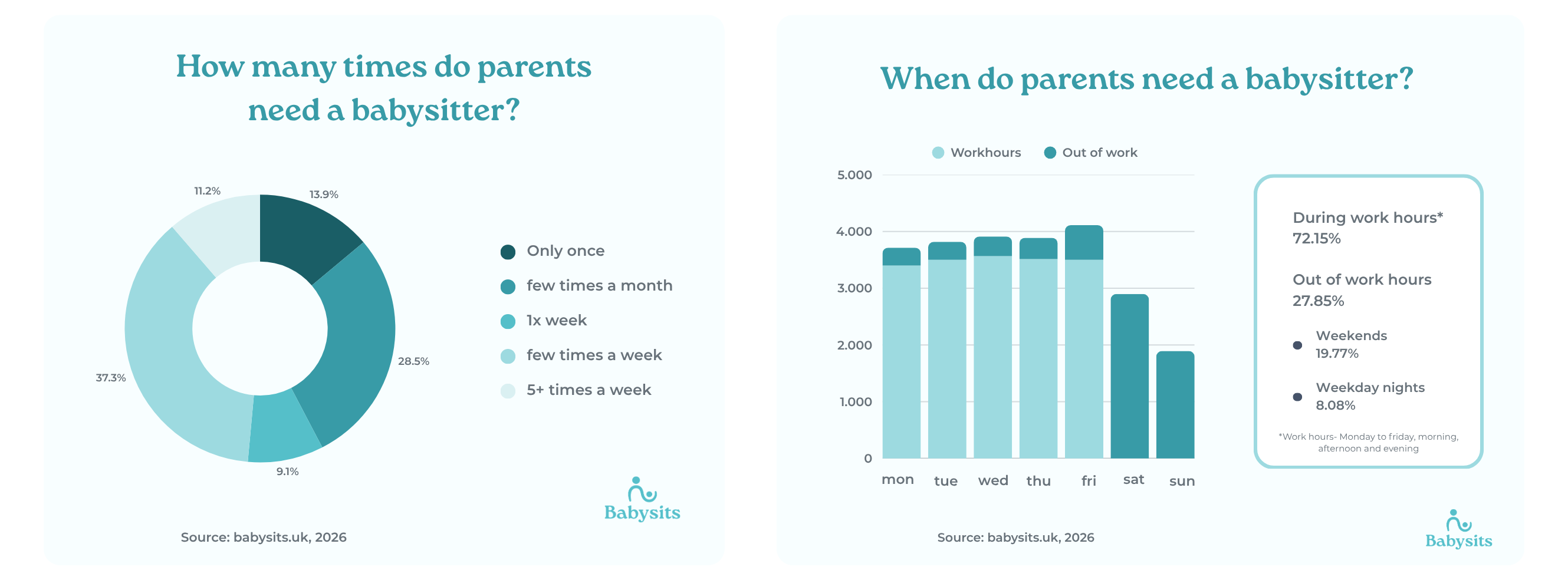
Based on Babysits data for the UK:
57% of families in the UK need a babysitter at least once per week.
Nearly half of families need a babysitter at least a few times a week
72% of childcare requests happen during work hours
These patterns show that babysitting demand is often regular and structured. For many families, it becomes part of their regular childcare routine rather than being used occasionally.
The data suggests that babysitting frequently functions as flexible childcare that can substitute or complement traditional daycare. Because most childcare requests occur during working hours and many families need care several times per week, babysitters often help parents cover commuting hours, extended workdays, flexible work schedules, days when daycare is unavailable or even substitute daycare altogether.
With one in three UK parents reducing their working hours due to childcare challenges, and many others working part-time or hybrid schedules, childcare needs are becoming more fragmented. Rather than requiring full-time, fixed childcare, many families need support only during specific working hours across the week, making flexible options like babysitting a practical and [more affordable] (https://www.babysits.uk/community-resources/1964/the-average-babysitting-cost-in-the-united-kingdom/){rel=dofollow target=_blank} fit. This pattern raises a broader question: is this unique to the UK, or part of a wider trend?
A Worldwide Perspective on Childcare During Work Hours
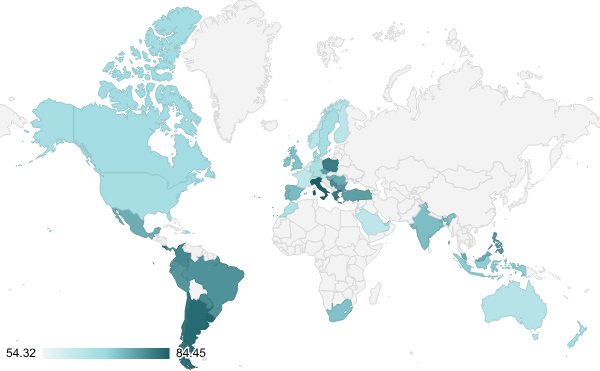
With 72% of childcare requests taking place during work hours, the UK sits towards the higher end among Western countries. At the same time, this is not unique to the UK. Across countries where Babysits is active, the share of childcare requests during work hours ranges from around 55% to over 80%, with most countries clustering above 60%. This suggests that while the UK is at the higher end among Western countries, the underlying challenge is part of a broader global trend.
How families and employers are adapting to childcare gaps
“Babysitting is no longer an occasional solution for British families. Parents are using babysitters and nannies to manage work schedules and fill gaps where traditional childcare falls short”- Peter, CEO of Babysits and parent of three.
Companies are also beginning to recognize this shift. Many employers are introducing broader or more flexible employee childcare benefits to help employees access extended childcare, including babysitting, when they need it.
“We’re seeing more and more companies show interest in our childcare employee benefits program, Babysits for Work.” - Peter, CEO of Babysits
As work continues to evolve, flexible childcare options such as babysitting are likely to become an essential part of how families manage their childcare needs in the years ahead.